Sinterklaas
Aankomende evenementen
Over
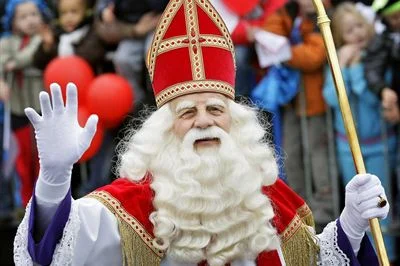
Sinterklaas is a fictional character based on the historical figure Saint Nicholas of Myra. Nikólaos, as he was originally named, was born on March 15, 270 in Patara, Lycia. He was an early bishop of the Greek town Myra (Demre in present-day Turkey), then part of the Roman Empire. In life, Nikólaos was beloved by the local population for giving away all of his possessions, leading to many legendary stories later on. He died on December 6, 343 in Myra, Lycia. Centuries after his death, the good-hearted and devout Nikólaos became a popular saint throughout Europe and Russia, being venerated in the Orthodox Greek and Russian Church, even though there are no surviving documents of him being canonized by any church authority. The word 'Sinterklaas' is a portmanteau of the Dutch words 'sint' ('saint') and 'Nikolaas' ('Nicholas'). Nikólaos became a well-loved folklore character in the Middle Ages, when he was the focus of many stories involving him performing miracles and coming to people's aid. When the Turks invaded Anatolia in the 11th century, the remains of Nikólaos were transported to Bari in Italy, where a church was erected in his memory. His feast day, December 6, was widely celebrated in medieval Europe until the Reformation. After that, the Saint Nicholas celebrations continued as a secular feast, most notably in the Lowlands and in the Alpine regions of Germany and Austria. Such festivities are depicted in paintings from the 15th century onward. The popularity of Saint Nicholas rose to new heights in The Netherlands and the Flemish part of Belgium during the mid-19th century, after he was depicted as a modern-day gift bringer in the 1850 picture book Sint-Nicolaas En Zijn Knecht by teacher from Amsterdam. Schenkman weaved many old traditions into a cohesive narrative, as well as introducing many of the tropes associated with Sinterklaas to this day. When the Dutch settled in the U.S., they brought Sinterklaas with them, where he became known as (mention…